Preservation & Engineering Heritage
The Spare Cabs Story
Built as contingency replacements for the Class 58 fleet, the two spare cabs survived unused for decades and now form an unusual but important part of the class’s preservation story.
After completing the Class 58 project, British Rail Engineering Limited (BREL) at Doncaster constructed two additional spare cabs for the fleet. These were intended to provide operational flexibility and allow rapid replacement in the event of collision damage or heavy wear.
They were supplied as shell structures only, with the expectation that internal fixtures, controls and fittings would be transferred from any damaged cab requiring replacement. In the event, none of the 50 locomotives suffered damage serious enough to require their use, and both spare cabs remained unused at Doncaster for more than 20 years.
2 Spare cabs built at Doncaster
2006 Both cabs offered for sale
2024 Second cab acquired by the group
Importance of the Spare Cabs
BREL Doncaster was renowned for its engineering standards and played a major role in British locomotive construction. The production of spare Class 58 cabs reflected that same forward planning, with both cabs built to the same structural standard as the originals.
Freight locomotives work in demanding environments, and cab damage through accident or heavy use can result in prolonged downtime. By constructing spare cabs in advance, British Rail ensured that damaged locomotives could, in theory, be returned to service more quickly and with less disruption to operations.
Sale of the Cabs
By the early 2000s, after the Class 58 fleet had been withdrawn from UK main line service, the two unused spare cabs still remained at the former BREL works in Doncaster. In 2006, both were put up for sale, and the group was able to acquire one of the two examples at that time.
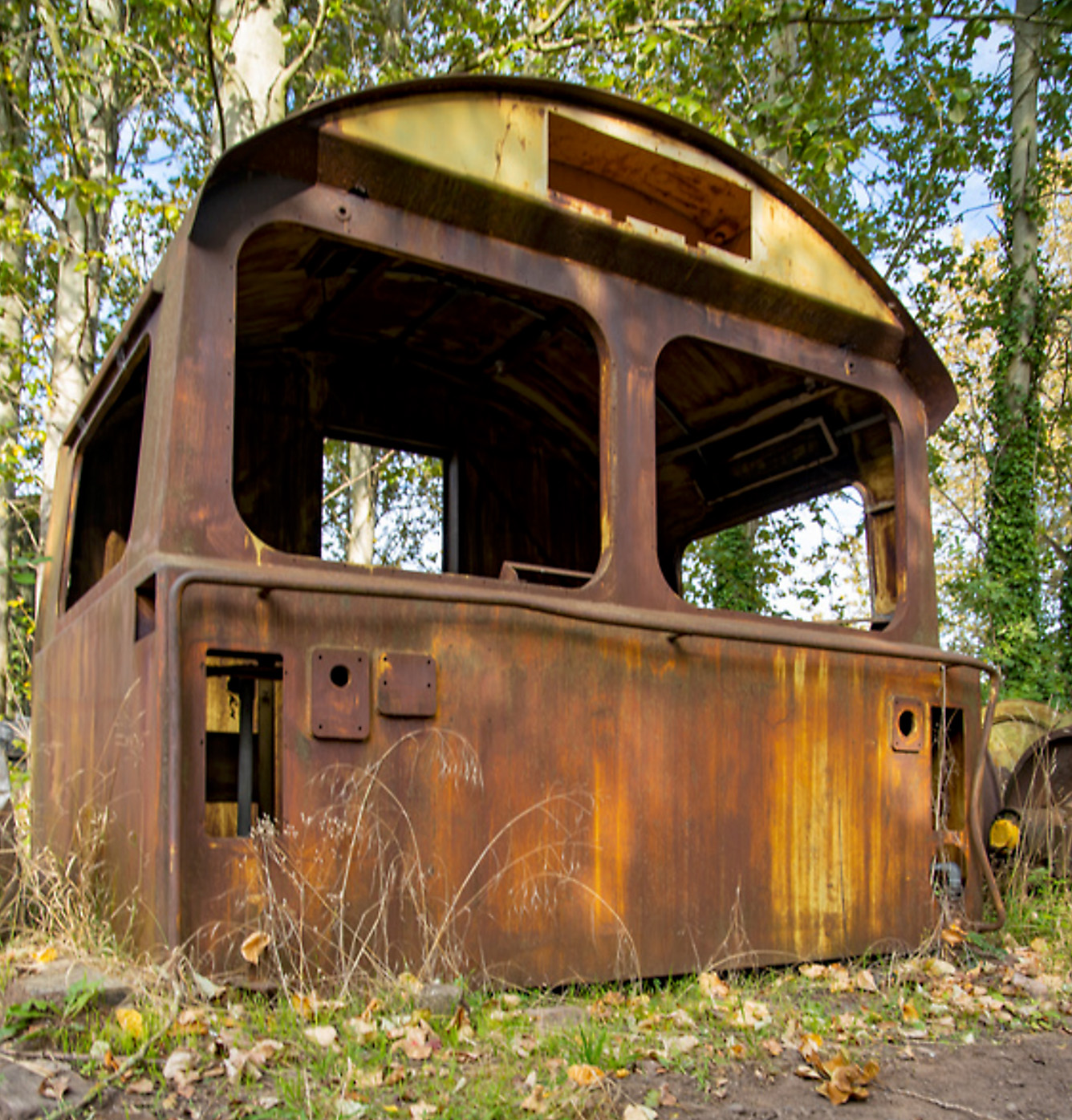
Cab No. 1
Spare Cab No. 1, still in its original shell condition.
Photo: Darren Clark
The first of the two cabs purchased by the group moved to its present home shortly after acquisition. However, when the group later purchased 58016, attention naturally shifted towards restoring the locomotive itself, and the cab remained untouched for some years.
The group still intends to restore this cab, and progress updates will be provided to members as work develops.
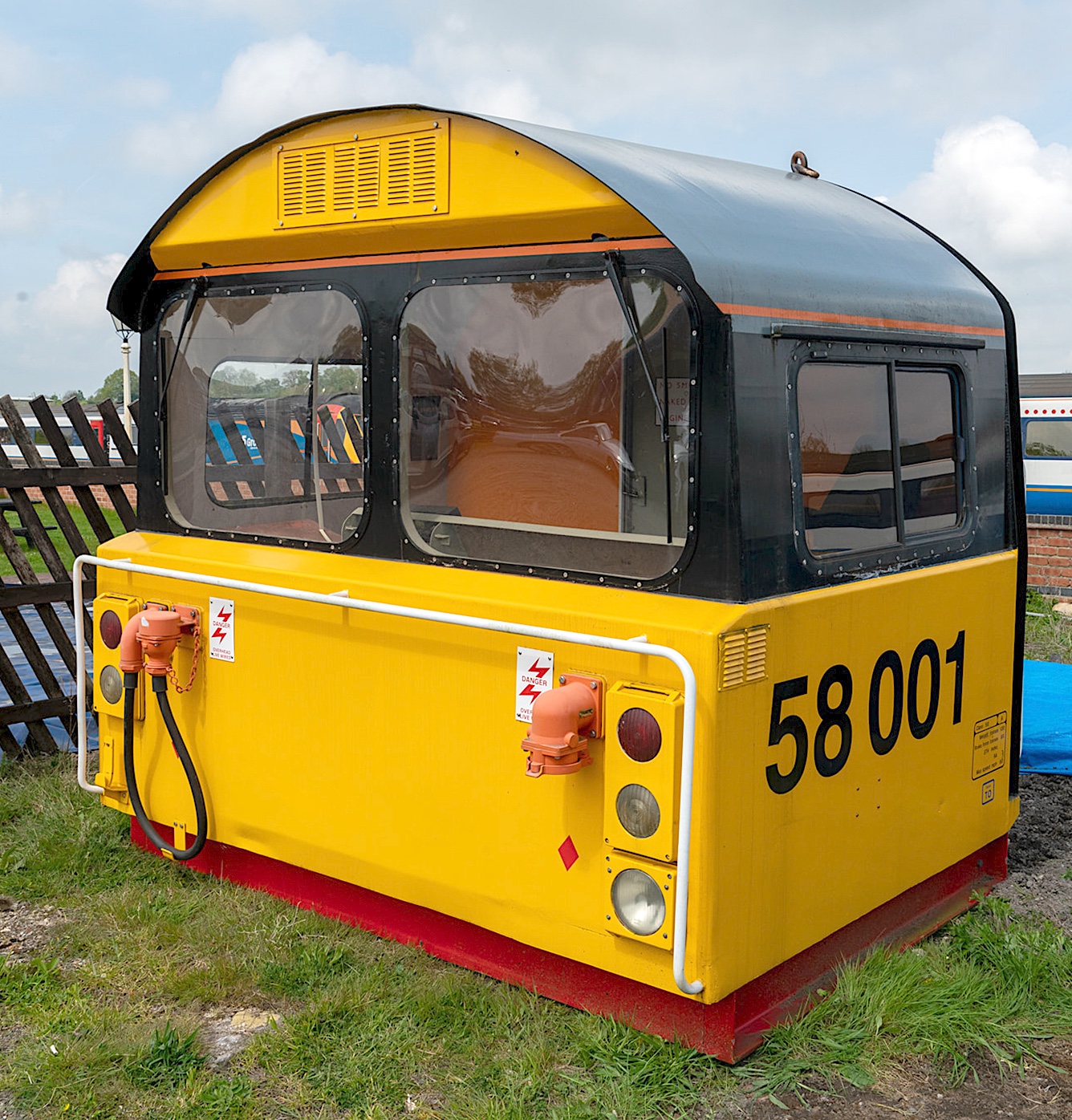
Cab No. 2
Spare Cab No. 2 at its current home at the Midland Railway Centre, Butterley.
Photo: Phil Lindsey
The second cab was purchased by a private individual and changed hands several times over the years. Its most notable owner was Martin Baker, who completed much of the external restoration and applied the number 58 001 to the driver’s cab side.
In 2023, Martin lent the cab to the group for the Rail Riders event at Crewe Heritage Centre. The group then purchased the cab in early 2024, and it was moved to its new home at the Midland Railway Centre, Butterley, on 1 May 2024. Work is now underway to complete its internal restoration.
Restoring the Cabs
Completing both spare cabs is theoretically possible, although the scale of the task means that any restoration programme must be carefully planned.
Availability of Parts
Restoration will require a range of specialist components, many of which are unique to the class or no longer in production. However, because the Class 58 was designed around modular construction and interchangeability, there remains some scope for sourcing, adapting or fabricating the necessary parts.
Expertise and Resources
Any meaningful restoration will need a committed volunteer team, technical knowledge of 1980s British locomotive practice, access to drawings and photographs, and significant financial support. Even with good reference material, smaller details could easily be missed without careful research.
Purpose of Restoration
The final intended use of the cabs will influence the restoration approach. A static display restoration would naturally focus on appearance and completeness, while there have also been discussions with external parties about the possibility of turning one cab into a working computer simulator.
Legacy and Impact
Today, the spare Class 58 cabs form an important and unusual extension of the class’s preservation story. They illustrate the practical, forward-thinking engineering approach that underpinned the original design and operation of the fleet.
Although none of the spare cabs was ever used in operational service, their survival helps tell the broader story of BREL Doncaster’s planning, British Rail’s freight priorities, and the enduring interest that still surrounds the Class 58 more than two decades after withdrawal.
The survival of both spare cabs provides a rare opportunity not only to preserve the history of the Class 58, but also to interpret the engineering thinking behind the fleet in a way that few other locomotive classes can demonstrate.