Preservation & Survivors
The Surviving Class 58s
Of the 50 Class 58s built at Doncaster Works, only a handful now survive in the UK and mainland Europe. Each has followed a very different path through withdrawal, export, storage, restoration and preservation.
The surviving Class 58s tell several different stories. Some remained in Britain and entered preservation, some spent years overseas before their careers came to an end, and others now survive in roles that continue to support the future of the class.
Below is an overview of the five remaining survivors most closely associated with the current preservation story: 58012, 58016, 58023, 58044 and 58048.
58012
Stored Battlefield Line, Shackerstone
Looking Back
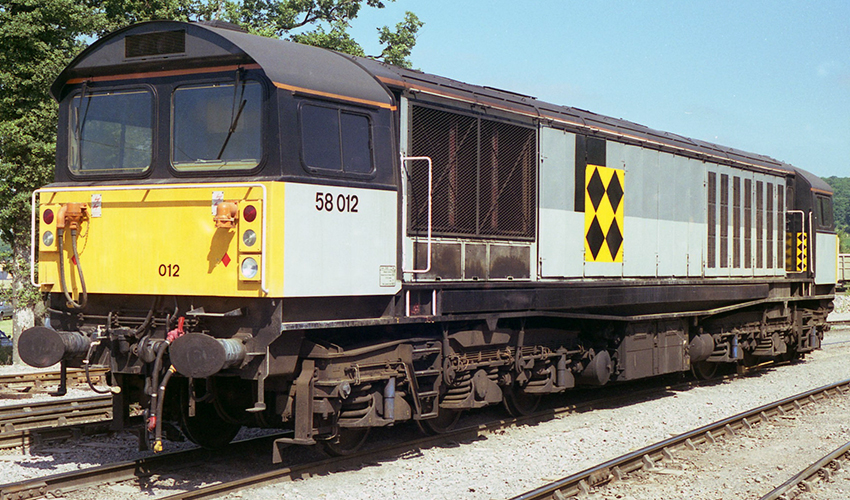
58012 was built by BREL at Doncaster Works and entered service in March 1984. Like much of the class, it was mainly employed on Merry-Go-Round coal traffic, hauling MGR hopper wagons between collieries and power stations across the East Midlands.
Although principally a freight locomotive, 58012 still accumulated 654 passenger miles, mainly on the Nuneaton drags. It also appeared on two railtours: The South Yorkshireman III on 24 March 1985 and the Worksop Open Day shuttle, alongside 58005, on 5 September 1993.
Its working life ended relatively early, with withdrawal in December 1999. It was later considered for export to France to assist with work on the LGV Est high-speed project, but a frost-damaged engine was discovered during preliminary inspection and 58009 was selected instead.
After many years in store at Toton, 58012 was purchased by a private owner in 2016 alongside 58023 and moved to the Battlefield Line, Shackerstone, where it remains today.
The Future
58012 is presently based at the Battlefield Line and serves an important role as a donor locomotive, supporting the restoration and continued survival of other Class 58s.
This role is significant, as it helps ensure that difficult-to-source components remain available for operational and restoration projects elsewhere in the preservation movement.
While its current function is practical rather than public-facing, the longer-term future of 58012 remains open, and the possibility of eventual restoration cannot be ruled out.
58016
Restoration Owned by the Class 58 Locomotive Group Leicester
Looking Back
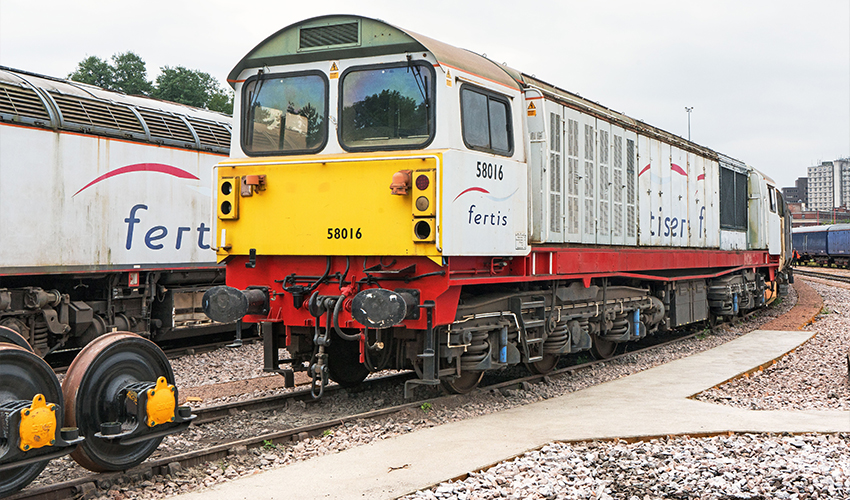
58016 was built at Doncaster Works by BREL and entered service in October 1984. During its BR and EWS career it was used primarily on coal traffic in and around the Midlands, but it also became the most travelled Class 58 in passenger use, recording 2,802 passenger miles.
The locomotive carried three liveries during its working life: Railfreight Red Stripe, EW&S maroon, and finally Fertis before export to France. It was one of only a small number of Class 58s to carry the earlier EW&S form before the ampersand was dropped in later EWS branding.
58016 was exported to France on 14 May 2005 for work on the LGV Est project, operating from the main construction bases at St Hilaire, Ocquerre and Pagny-sur-Moselle. It was the only Class 58 in the French fleet to suffer a serious problem, when its alternator failed.
After returning to the UK, it remained stored at Toton until 2010, when the group secured its purchase following DB Cargo’s sale of several stored locomotives. Restoration began at Barrow Hill before the locomotive moved to Leicester in 2015 for heavier work and improved access to engineering support.
The Future
58016 remains at the heart of the Class 58 Locomotive Group’s long-term preservation ambitions and continues to be a central focus of the group’s work.
Progress has not moved as quickly as hoped, largely because of factors beyond the group’s control. Even so, inspections, planning and technical work have continued behind the scenes, with condition monitoring and preparation for the next stage of restoration still taking place.
Looking ahead, the prospect of a future relocation offers renewed confidence and a potential new chapter for the project. There is cautious optimism that the coming period will allow more visible and meaningful progress to resume.
58023
Active Operational in preservation
Looking Back
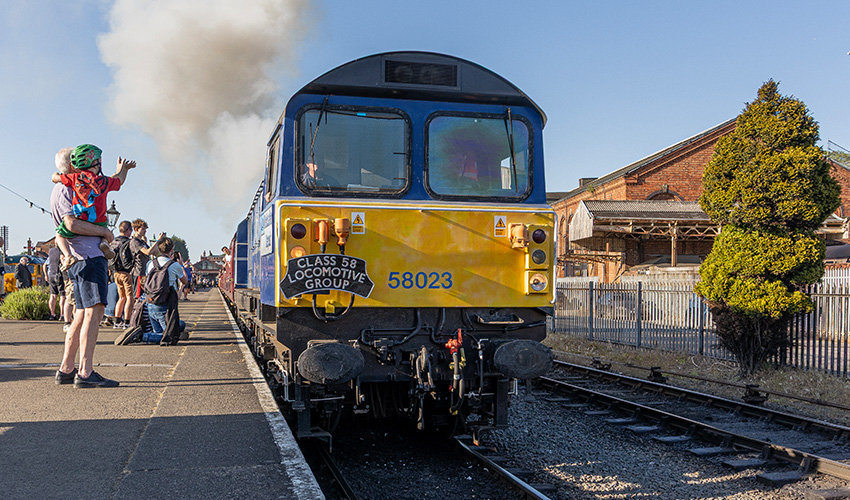
58023 was built at Doncaster Works by BREL and entered service in December 1984. It spent most of its working life on coal traffic, though like several classmates it also appeared on Nuneaton drags and other occasional passenger workings. It was named Peterborough Depot in June 1994 and was withdrawn by EWS in 2002.
Unlike many members of the fleet, 58023 was neither exported nor scrapped. It remained at Toton for many years before being purchased alongside 58012 in 2016.
The locomotive is owned by Edward Stevenson. Restoration work was initially undertaken by Simon Powell and Adrian Lock of Heritage Transport Restoration and Supplies Ltd, whose team carried out major mechanical and cosmetic work before the locomotive later moved to UKRL Leicester for the remaining stages.
The successful return of 58023 to working order marked the first time in over 20 years that a Class 58 had been restored to operational condition, reflecting a huge amount of effort, commitment and technical ability.
The Future
58023 holds the distinction of being the first member of the class to enter active preservation. Its public debut took place at the Severn Valley Railway Diesel Gala in October 2024, a milestone event in the history of the class.
Since then, it has also appeared at major events including The Greatest Gathering and Barrow Hill’s 200 Years of the Railways celebrations, demonstrating that the Class 58 can once again be seen and appreciated in action.
Its return to traffic is a credit to all those involved, and it now serves as the public standard-bearer for the class on the heritage railway scene.
58044
Awaiting Disposal Woippy, Metz, France
Looking Back
58044 was built at Doncaster Works by BREL and entered service in August 1986. Named Oxcroft Opencast in May 1992, it spent its British working life largely on coal traffic, hauling MGR wagons to power stations in and around the Midlands.
After withdrawal in July 1999, it was selected for export to the Netherlands as part of the ACTS deal. Renumbered 5812 and painted in ACTS blue and yellow, it was exported in October 2003 and quickly entered service on the Veendam Shuttle route, for which the Class 58s had specifically been hired.
On 23 June 2004 it became the first Class 58 to work a passenger or charter service for almost two years, when it hauled a private ProRail excursion from Rotterdam to Maasvlakte Yard via Utrecht and Amsterdam.
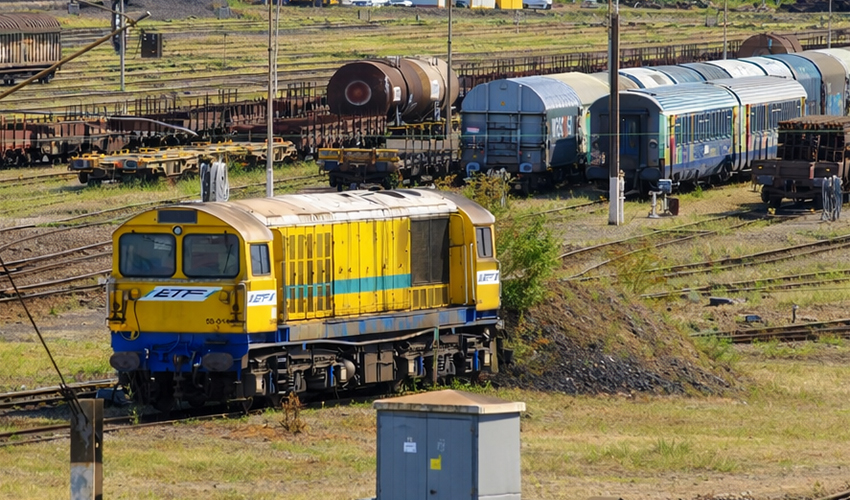
After around four years in the Netherlands, 58044 returned briefly to the UK before later joining the French ETF fleet in 2009, painted in yellow with a green band and blue solebar and renumbered 58-044 for work on the Rhine-Rhône LGV project.
The Future
Following completion of the French high-speed line work, the locomotive was sent towards Alizay in 2013 but developed wheelset problems and a hot axlebox en route. As a result, it was left at Woippy, near Metz, where it remains.
Although a number of parties have explored the possibility of repatriating 58044 to the UK, regulatory complications — especially in relation to REACH requirements — have made any practical return extremely difficult.
DB Cargo formally disposed of the locomotive in 2023 along with the other Alizay-based Class 58s. Although still physically present at Woippy, it is now effectively awaiting disposal.
58048
Restoration Battlefield Line, Shackerstone
Looking Back
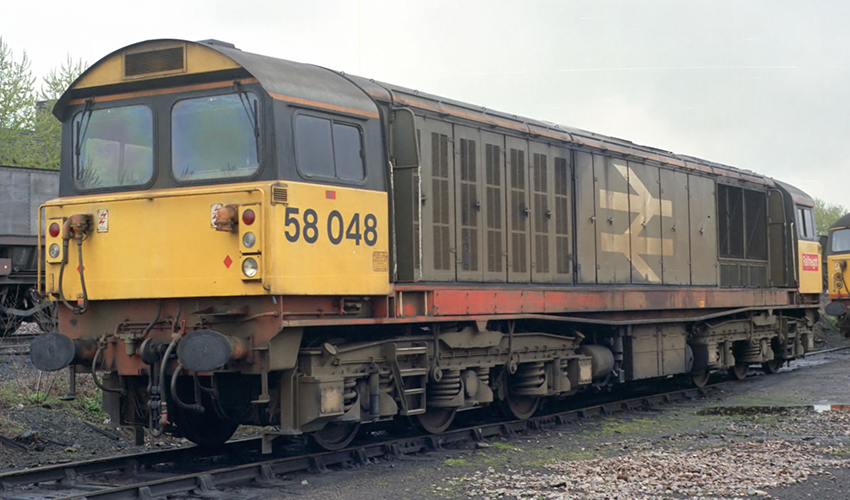
58048 entered service in November 1986 and, like most of the class, spent much of its working life hauling MGR wagons from collieries to power stations around the Midlands. Reflecting this role, it was named Coventry Colliery in May 1991.
Its operational life was relatively short, ending in January 2000. Unlike many other Class 58s, 58048 was neither exported nor immediately scrapped, instead spending around 16 years in store.
In 2016 it was purchased from Crewe EMD by a private owner and moved to the Battlefield Line at Shackerstone, where it became one of the very few remaining UK-based survivors.
The Future
58048 remains based at the Battlefield Line, where restoration work is currently paused. Even so, the locomotive continues to form an important part of the broader preservation picture for the class.
Its long-term significance is considerable, not least because it is one of the final British Rail-built Doncaster Class 58s to survive. Any future progress made on the locomotive will represent a further strengthening of the overall Class 58 preservation story.
The ambition remains to see as many surviving members of the class as possible preserved in meaningful form, and 58048 remains central to that wider goal.
As we look ahead to the future of the surviving Class 58s, we would like to thank everyone who continues to support the Class 58 Locomotive Group and the wider preservation movement. Donations, encouragement, event conversations, shared memories and technical knowledge all play a vital role in safeguarding the legacy of this remarkable class for future generations.